

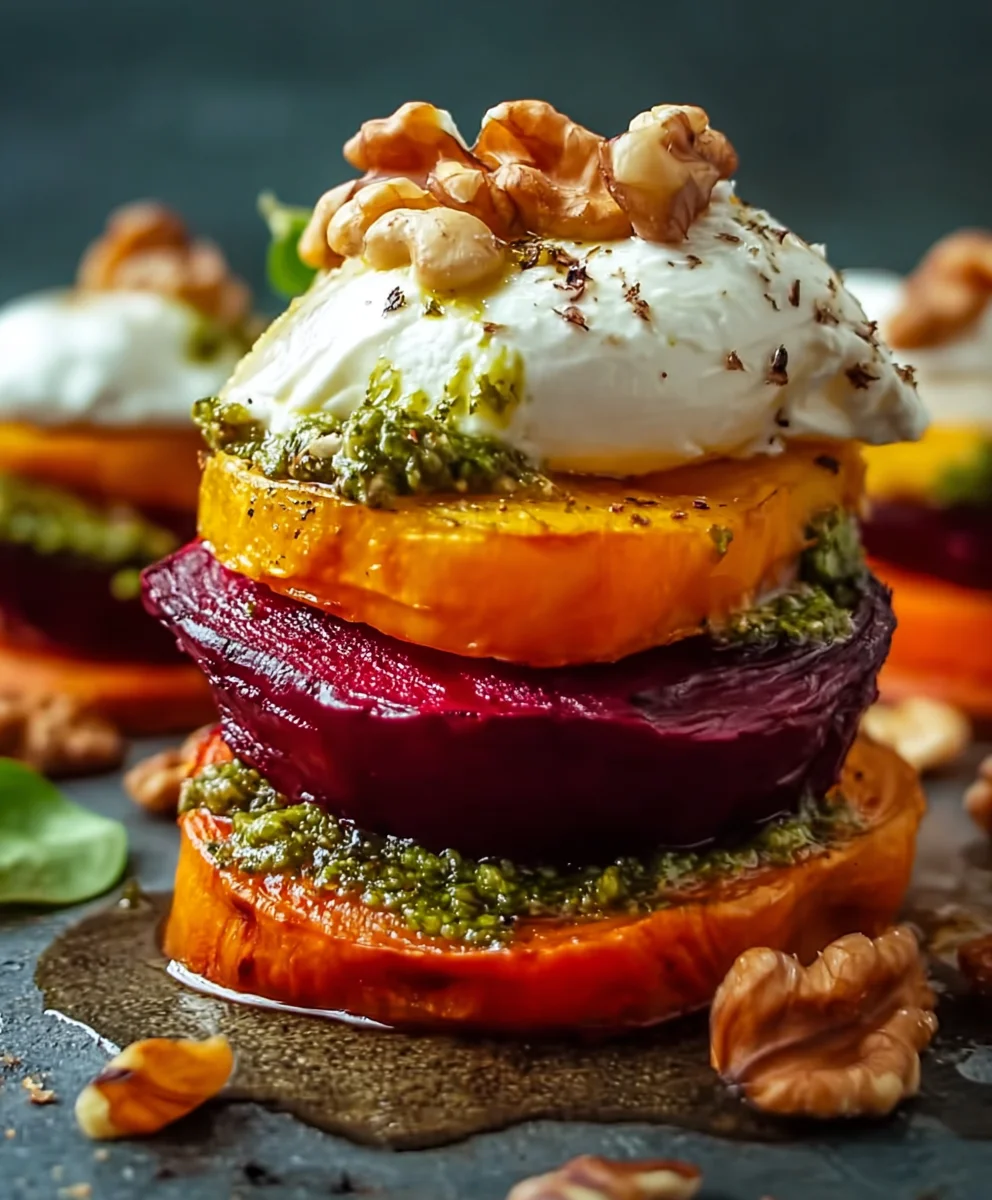
Sweet Potato Beet Stacks With Pesto Burrata Walnuts – what a delightful combination, isn’t it? As a passionate home cook, I’m always searching for dishes that not only tantalize the taste buds but also captivate the eye, and this recipe truly delivers on both fronts. Imagine vibrant layers of earthy beets and sweet potatoes, perfectly cooked to tender perfection, nestled between dollops of fresh, herbaceous pesto and creamy, indulgent burrata cheese, all crowned with a satisfying crunch of toasted walnuts. It’s more than just a dish; it’s an experience that promises to impress.
While the concept of stacking vegetables has roots in elegant plating techniques seen in fine dining, this particular marriage of flavors celebrates the best of seasonal produce and artisanal dairy. It’s a testament to how humble ingredients, when thoughtfully combined, can create something truly extraordinary and sophisticated enough for any occasion, from a festive dinner party to a comforting weeknight meal.
Why You’ll Fall in Love with These Sweet Potato Beet Stacks
People absolutely adore this dish because of its incredible balance of flavors and textures. The natural sweetness of the sweet potatoes and beets harmonizes beautifully with the bright, aromatic pesto and the rich, milky burrata. The walnuts provide a crucial textural contrast, making every bite a complex and utterly satisfying symphony. Preparing these Sweet Potato Beet Stacks With Pesto Burrata Walnuts is surprisingly straightforward, yet the result is a gourmet masterpiece that feels incredibly special and genuinely impressive. It’s a healthy, vibrant, and utterly delicious way to enjoy your vegetables – a true showstopper!
Ingredients:
- For the Roasted Vegetables:
- Sweet Potatoes: 2 large or 3 medium-sized (approximately 2.5-3 pounds total), preferably uniformly shaped for easy slicing
- Beets: 3-4 medium-sized (approximately 1.5-2 pounds total), a mix of red and golden beets offers a beautiful visual contrast
- Olive Oil: 4 tablespoons, divided, plus extra for drizzling
- Sea Salt: 1 teaspoon, or to taste
- Freshly Ground Black Pepper: ½ teaspoon, or to taste
- For the Homemade Pesto:
- Fresh Basil Leaves: 3 cups, packed (this is usually about 2 large bunches of basil)
- Pine Nuts: ½ cup, lightly toasted (you can also use walnuts if preferred, though we’re using walnuts as a topping)
- Garlic Cloves: 3 large, peeled and roughly chopped
- Parmesan Cheese: ½ cup, freshly grated (for the best flavor, grate it yourself!)
- Extra Virgin Olive Oil: ½ cup, plus more if needed to reach desired consistency
- Fresh Lemon Juice: 1 tablespoon (this really brightens up the pesto!)
- Salt and Pepper: to taste (start with ¼ teaspoon of each and adjust)
- For Assembly and Garnish:
- Burrata Cheese: 2 balls (each 4-6 ounces), brought to room temperature before serving
- Walnuts: 1 cup, roughly chopped and lightly toasted (these add amazing crunch!)
- Optional Garnishes: Fresh basil sprigs, a drizzle of balsamic glaze, flaky sea salt
Preparing the Vegetables: Roasting Sweet Potatoes and Beets
This is where the magic begins, transforming simple root vegetables into tender, flavorful foundations for our Sweet Potato Beet Stacks With Pesto Burrata Walnuts. Roasting brings out their natural sweetness and earthiness beautifully.
- Preheat Oven and Prepare Baking Sheets: My first step is always to get the oven ready. I preheat it to a robust 400°F (200°C). While it’s heating, I grab two large baking sheets. To make cleanup a breeze and ensure the vegetables don’t stick, I always line mine with parchment paper. If you don’t have parchment, a good non-stick spray will do the trick, but parchment helps achieve that perfect caramelization without much fuss.
- Prepare the Sweet Potatoes: Now, let’s get those gorgeous sweet potatoes ready. I like to choose ones that are relatively consistent in size and shape, as this really helps them cook evenly. Give them a thorough scrub under cold running water to remove any soil. For this recipe, I prefer not to peel them; the skin becomes wonderfully tender and caramelized when roasted, adding not just flavor but also a rustic charm and extra fiber. Using a very sharp knife or, even better, a mandoline slicer (please be extra careful!), slice the sweet potatoes into rounds about ¼-inch thick. Consistency in thickness is crucial here; it ensures that every single slice cooks perfectly at the same rate, preventing some from being undercooked while others are burnt. Place all the sliced sweet potatoes into a large mixing bowl.
- Season and Roast Sweet Potatoes: Drizzle the sweet potato slices with 2 tablespoons of olive oil. Sprinkle them with about ½ teaspoon of sea salt and ¼ teaspoon of freshly ground black pepper. Now, get your hands in there and gently toss everything until each slice is lightly coated in oil and seasoning. The goal here is a thin, even layer. Arrange the seasoned sweet potato slices in a single layer on one of your prepared baking sheets. It’s incredibly important not to overcrowd the pan. If the slices are overlapping too much, they’ll steam instead of roast, and we’re aiming for those lovely crispy edges and a tender, caramelized interior. Pop them into the preheated oven for 20-25 minutes. Make sure to flip them halfway through to ensure even browning and tenderness. Keep a close eye on them; oven temperatures can be a bit quirky, and you want them just right—tender with slightly golden, crispy edges.
- Prepare the Beets: Next up are the beets! These vibrant root vegetables add a beautiful earthy sweetness and a stunning color to our stacks. If you’re using a mix of red and golden beets, I often recommend roasting them on separate halves of the baking sheet or even on a different sheet if you have space, especially if you want to prevent the red beets from “bleeding” their color onto the golden ones. Give your beets a good scrub. Unlike the sweet potatoes, I usually peel my beets for this dish. I find it gives the finished stack a smoother, more refined texture, and avoids any potentially tough bits of skin. Again, using a sharp knife or mandoline, slice them into uniform ¼-inch thick rounds, just like the sweet potatoes. Transfer the beet slices to a separate large mixing bowl.
- Season and Roast Beets: Drizzle the beet slices with the remaining 2 tablespoons of olive oil. Sprinkle them with the remaining ½ teaspoon of sea salt and ¼ teaspoon of black pepper. Toss gently to ensure every slice is coated. Arrange these beautiful beet slices in a single layer on the second prepared baking sheet, again making sure they are not overlapping. Roast them for 25-30 minutes, or until they are fork-tender and have developed a lovely caramelized sweetness. Beets often take a little longer than sweet potatoes due to their higher water content and density, so a little extra roasting time might be needed. Remember to flip them halfway through for even cooking and browning.
- Cool the Roasted Vegetables: Once both the sweet potatoes and beets are perfectly roasted and tender, remove them from the oven. Let them cool slightly on the baking sheets. As they cool, they will firm up a little, which makes them much easier to handle and stack. This cooling step is truly important for the structural integrity of your Sweet Potato Beet Stacks.
Making the Homemade Pesto
A fresh, vibrant homemade pesto is absolutely essential for these Sweet Potato Beet Stacks With Pesto Burrata Walnuts. It adds a burst of herbaceous, garlicky, and nutty flavor that perfectly complements the roasted vegetables and creamy burrata. Trust me, it’s worth the small effort!
- Toast the Pine Nuts (or Walnuts for Pesto): While your vegetables are happily roasting, let’s focus on the pesto. If your pine nuts aren’t pre-toasted, now’s the time to give them a quick toast. Heat a small, dry skillet over medium-low heat. Add the pine nuts (or walnuts, if you’re using them in your pesto instead of pine nuts) and toast them for about 3-5 minutes, shaking the pan frequently. You’ll know they’re ready when they become wonderfully fragrant and develop a light golden color. Be very careful not to burn them; nuts can go from perfectly toasted to burnt in a blink! Immediately remove them from the pan and let them cool down completely. Toasting really enhances their nutty depth of flavor.
- Prepare the Basil: Make sure your fresh basil leaves are thoroughly washed and, most importantly, completely dry. Any excess water will thin out your pesto and dilute its incredible fresh flavor. I usually give them a gentle pat-down with paper towels or use a salad spinner to ensure they are bone dry.
- Combine Ingredients in Food Processor: In the bowl of your food processor, combine the cooled, toasted pine nuts, the peeled and roughly chopped garlic cloves, and a good pinch of salt and pepper. Pulse these ingredients a few times until the nuts and garlic are finely chopped. This step ensures the garlic is well-distributed and not overpowering in large chunks.
- Add Basil and Cheese: Now, add the beautiful fresh basil leaves to the food processor. Pulse again, stopping to scrape down the sides of the bowl with a spatula as needed, until the basil is coarsely chopped. Then, add the freshly grated Parmesan cheese. Pulse a few more times to incorporate everything. At this point, you’ll have a vibrant green, slightly chunky mixture.
- Slowly Drizzle in Olive Oil: With the food processor running on a low setting, slowly drizzle in the ½ cup of extra virgin olive oil in a steady, thin stream. Continue processing until the pesto reaches your desired consistency. I personally love mine to be slightly chunky, as it adds a wonderful texture to the stacks, but you can process it longer for a smoother, more uniform sauce. Once it’s at your preferred consistency, taste it and adjust the seasoning with more salt, pepper, or that crucial squeeze of fresh lemon juice if needed. The lemon juice truly brightens all the flavors and adds a zesty counterpoint. If your pesto seems too thick, you can add a tiny bit more olive oil, a teaspoon at a time, until it reaches a perfectly spreadable and luscious consistency. A good homemade pesto should be rich, incredibly vibrant in color, and bursting with fresh, aromatic flavors!
Assembling the Sweet Potato Beet Stacks
This is the moment where all our careful preparation comes together in a symphony of colors, textures, and flavors. Building these Sweet Potato Beet Stacks With Pesto Burrata Walnuts is an art, and a very delicious one at that!
- Prepare the Burrata and Walnuts: First, let’s get our burrata ready. Gently take the burrata balls out of their packaging and allow them to come to room temperature for about 15-20 minutes. This is a crucial step; when burrata is at room temperature, its creamy, luscious interior is perfectly soft and ready to ooze delightfully, which is exactly what we want! If you haven’t already, roughly chop your walnuts. For an extra layer of irresistible flavor and crunch, I highly recommend quickly toasting these chopped walnuts in a dry skillet over medium-low heat for a few minutes, just until they become fragrant and lightly golden. This simple step elevates their natural earthiness beautifully.
- Start Stacking: Now for the truly fun part – building our stunning individual stacks! On each individual serving plate, or on a large elegant platter if you’re preparing a communal appetizer, begin by placing a roasted sweet potato slice as the base. I always try to pick one of the larger, flatter slices for the foundation to ensure maximum stability for our delicious tower.
- Layering Process:
- On top of your sweet potato base, spread a generous spoonful of your fresh, vibrant homemade pesto. Don’t be shy; the pesto is a key flavor component!
- Next, carefully place a roasted beet slice over the pesto. If you’re using a mix of red and golden beets, try to alternate colors for a truly striking visual effect.
- Follow with another thin layer of that glorious pesto. This ensures flavor in every bite and helps “glue” the layers together.
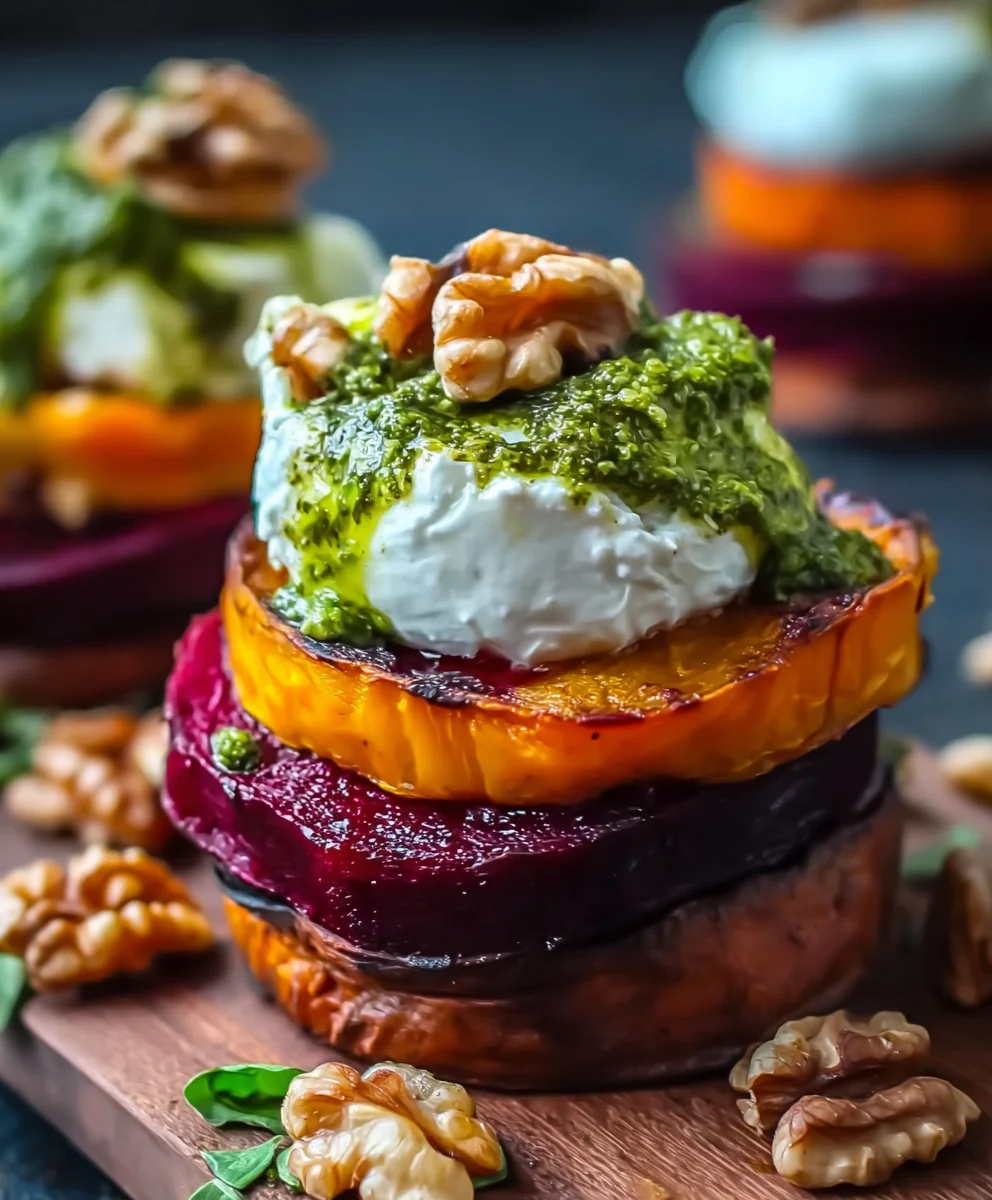
- Continue this delightful alternation: sweet potato, pesto, then beet, and more pesto, building upwards. I usually aim for 3-4 layers of each vegetable to create a satisfyingly tall and impressive stack. You can finish with either a beet slice for a bold color contrast or a sweet potato slice, depending on your aesthetic preference. The main goal here is to create stable, visually appealing layers that are also easy to eat. You might find that some vegetable slices are slightly different sizes; just try to match them up as best you can for each individual stack, creating these delightful, rustic towers of goodness.
- Add the Burrata: Once your beautiful stacks are built, it’s time to crown them with the star topping: the incredibly creamy burrata. Carefully tear or cut each burrata ball in half. For smaller stacks, you might even opt for quarters. Gently place a generous portion of burrata on top of each stack, allowing its soft, luscious, creamy interior to spill out slightly. The mild, milky, and incredibly creamy burrata provides the perfect luxurious counterpoint to the earthy sweetness of the vegetables and the bright, pungent flavors of the pesto. It adds that indulgent, melt-in-your-mouth texture that truly elevates the entire dish.
- Garnish and Finish: To finish these magnificent Sweet Potato Beet Stacks With Pesto Burrata Walnuts, generously sprinkle the roughly chopped and toasted walnuts over and around the burrata and the stacks. The walnuts add a delightful, much-needed crunch and a complementary nutty flavor that ties everything together. For an extra touch of freshness, elegance, and aromatic appeal, garnish each stack with a few small fresh basil leaves. If you desire, a light drizzle of good quality balsamic glaze can add a wonderful sweet and tangy finish, enhancing the sweetness of the root vegetables. A final, delicate sprinkle of flaky sea salt can truly enhance all the flavors, drawing out the natural sweetness of the sweet potatoes and the deep earthiness of the beets, bringing everything into perfect harmony.
Serving Suggestions and Tips
These Sweet Potato Beet Stacks With Pesto Burrata Walnuts are not just a dish; they’re an experience. Here are a few tips to make them shine even brighter on your table.
- Serve Immediately for Best Experience: While the components are delightful at room temperature, these stacks are truly at their best when served immediately after assembly. This ensures the burrata is at its perfectly soft, creamy, room-temperature peak, and the toasted walnuts maintain their delightful crispness. The roasted vegetables themselves are delicious warm or at room temperature, offering a pleasing contrast.
- Make-Ahead Components for Convenience: If you’re planning for a dinner party or want to save time, you can certainly prepare some elements in advance. The roasted sweet potatoes and beets can be cooked a day or two ahead of time. Store them in separate airtight containers in the refrigerator. When ready to assemble, you can gently reheat them in the oven for a few minutes until just warm, or simply allow them to come to room temperature. The homemade pesto is also a great make-ahead item; it can be prepared 2-3 days ahead and stored in an airtight container in the fridge. To prevent oxidation and keep its vibrant green color, I always top the pesto with a thin layer of olive oil before sealing it.
- Exploring Pesto Variations: While I absolutely adore the classic basil pesto for this dish, feel free to get creative with your pesto! An arugula pesto would introduce a wonderful peppery kick, adding another layer of complexity. Alternatively, a sun-dried tomato pesto could bring a different kind of rich, umami depth. If you’re catering to guests with nut allergies, sunflower seeds or pumpkin seeds can be used in place of pine nuts for the pesto, or you can simply omit nuts entirely if serving the dish without any nut components.
- Choosing Your Beets Wisely: I am a huge proponent of using a mix of red and golden beets. Their stunning visual contrast makes the stacks incredibly eye-catching. Beyond aesthetics, golden beets tend to be a little sweeter and less earthy than their red counterparts, and they have the added advantage of not “bleeding” their color, which helps maintain cleaner, more defined layers in your stacks.
- The Perfect Pairing: These Sweet Potato Beet Stacks With Pesto Burrata Walnuts are incredibly versatile. They make a fantastic, elegant appetizer that will wow your guests. They’re also substantial enough to be a light and satisfying lunch, perhaps served with a simple green salad. Alternatively, they shine as a stunning side dish alongside grilled chicken, baked fish, or even a hearty vegetarian main course like lentil loaf or quinoa patties. Their vibrant colors and complex flavors, boasting a delightful combination of sweet, earthy, savory, creamy, and crunchy textures, make them a standout on any table. Each bite truly offers a harmonious blend of flavors that will impress and satisfy.
- Presentation Enhances the Experience: Remember, we always eat with our eyes first! Take a moment to arrange your stacks artfully on the plate. A few strategically placed fresh basil leaves, an extra drizzle of good quality extra virgin olive oil, or even a sprinkle of edible flowers can elevate the presentation further, making the dish feel even more special and inviting. Don’t underestimate the power of thoughtful plating to make your culinary creations truly unforgettable.
Conclusion:
Okay, friends, if there’s one recipe you absolutely have to add to your culinary repertoire this season, it’s this one. I honestly can’t stress enough how much joy these stacks bring to the table. We’re talking about a symphony of flavors and textures that dance on your palate, a visual feast that makes any meal feel special. From the earthy sweetness of the roasted sweet potatoes and vibrant beets to the aromatic punch of fresh pesto, the luscious creaminess of burrata, and the satisfying crunch of toasted walnuts – every single element plays a crucial role in creating something truly spectacular. It’s more than just a side dish; it’s an experience, a delightful exploration of simple ingredients elevated to gourmet status with surprisingly little effort. Trust me when I say this dish, the incredible Sweet Potato Beet Stacks With Pesto Burrata Walnuts, isn’t just delicious; it’s an absolute showstopper that will have everyone asking for the recipe.
Why This Recipe Is a Game-Changer
I crafted this recipe with the intention of showcasing how beautiful and satisfying vegetarian meals can be, and I genuinely believe it delivers on all fronts. It’s hearty enough to stand as a light main course, yet elegant enough to grace your holiday spread or a sophisticated dinner party. Imagine the rich, caramelized edges of the roasted vegetables, slightly charred and tender, providing the perfect base. Then comes the burst of herbaceousness from the pesto, which I encourage you to make fresh if time permits – the difference is astounding! And let’s not forget the burrata. Oh, the burrata! Its cool, creamy interior provides an incredible counterpoint to the warm vegetables, melting just slightly into a decadent pool that brings everything together. The walnuts aren’t just for decoration; they add that much-needed textural contrast, a nutty depth that completes each bite. It’s truly a celebration of wholesome ingredients coming together in a way that feels both comforting and incredibly luxurious.
Elevate Your Meal: Serving Suggestions and Creative Variations
Now, let’s talk about how you can make this recipe uniquely yours or serve it for different occasions. While the Sweet Potato Beet Stacks With Pesto Burrata Walnuts are utterly fantastic on their own as a vegetarian main, they also make an exceptional side dish. Pair them with a simply grilled piece of fish, a pan-seared chicken breast, or even a robust lentil soup for a wholesome and balanced meal. For a lighter touch, serve them alongside a crisp green salad tossed with a zesty vinaigrette. They’re also brilliant as an impressive appetizer if you make smaller stacks – perfect for a brunch spread or a sophisticated starter. Don’t be afraid to think outside the box; these stacks are versatile enough to fit into almost any meal plan, adding a burst of color and flavor that will undoubtedly impress.
Feeling adventurous? Here are some variations I’ve personally enjoyed experimenting with:
- Cheese Swaps: If burrata isn’t available or you prefer something different, creamy goat cheese or crumbled feta would offer a lovely tangy contrast. Fresh mozzarella pearls could also work for a milder flavor.
- Nutty Alternatives: Pecans, pine nuts, or even toasted pumpkin seeds could replace walnuts, each bringing their own distinct flavor profile and crunch.
- Pesto Play: Don’t limit yourself to basil pesto! A sun-dried tomato pesto would add a sweet, savory depth, while an arugula or kale pesto would introduce a lovely peppery bite. You could even try a cilantro-lime pesto for an unexpected twist.
- Seasonal Veggies: Feel free to experiment with other thinly sliced, roasted vegetables in your stacks. Zucchini, eggplant, or even thinly sliced bell peppers could make wonderful additions, adding more layers of flavor and color to your towering creations.
- A Hint of Heat: For those who love a little kick, a sprinkle of red pepper flakes over the stacks before serving would be a delightful addition, awakening the palate with a subtle warmth.
- Vegan Friendly: To make this recipe completely vegan, simply omit the burrata and ensure your pesto is dairy-free (using nutritional yeast for a cheesy flavor and a plant-based oil). It’s still incredibly delicious and satisfying!
- Balsamic Glaze: A drizzle of high-quality balsamic glaze just before serving can add a beautiful sheen and a tangy-sweet counterpoint that enhances all the other flavors, making each bite even more complex.
Your Turn!
I truly hope this conclusion inspires you to preheat your oven and give these incredible stacks a try. I promise you won’t regret it. There’s something so satisfying about creating a dish that’s not only incredibly flavorful but also stunning to look at. It’s a culinary win that will boost your confidence in the kitchen and bring smiles to the faces of those you share it with. I’m always so excited to see your culinary adventures, so please, once you’ve made your own batch of these beautiful stacks, don’t hesitate to share your experience! Tag me on social media, leave a comment below, or just tell your friends – word of mouth is the best compliment a recipe can get. I can’t wait to hear how much you loved the vibrant colors, the harmonious flavors, and the impressive presentation of your very own Sweet Potato Beet Stacks With Pesto Burrata Walnuts. Happy cooking, everyone!
Sweet Potato Beet Stacks with Pesto Burrata & Walnuts
Vibrant layers of roasted sweet potatoes and beets, stacked with fresh basil and parsley pesto, creamy burrata, and crunchy toasted walnuts. A visually stunning and satisfying dish perfect as an appetizer or light meal.
Ingredients
-
2 medium sweet potatoes, peeled, sliced 1/4-inch thick
-
2 medium beets, peeled, sliced 1/4-inch thick
-
2 tbsp olive oil (for roasting)
-
Salt, to taste (for roasting)
-
Pepper, to taste (for roasting)
-
2 balls burrata cheese (approx. 6 oz each)
-
1/2 cup walnuts, toasted
-
1/4 cup fresh basil leaves (for pesto)
-
1/4 cup fresh parsley (for pesto)
-
1/4 cup pine nuts (for pesto)
-
2 tbsp grated Parmesan cheese (for pesto)
-
1 clove garlic (for pesto)
-
1/4 cup extra virgin olive oil (for pesto)
-
Juice of 1/2 lemon (for pesto)
-
Salt, to taste (for pesto)
-
Pepper, to taste (for pesto)
Instructions
-
Step 1
Preheat oven to 400°F (200°C). Line two baking sheets with parchment paper. Toss sweet potato slices with 1 tbsp olive oil, a pinch of salt and pepper. Arrange in a single layer on one sheet. Roast for 20-25 minutes, flipping halfway. Toss beet slices with remaining 1 tbsp olive oil, a pinch of salt and pepper. Arrange in a single layer on the second sheet. Roast for 25-30 minutes, flipping halfway, until fork-tender. Cool slightly. -
Step 2
In a food processor, combine pine nuts, garlic, basil, parsley, Parmesan cheese, and a pinch of salt and pepper. Pulse until finely chopped. With the processor running, slowly drizzle in 1/4 cup extra virgin olive oil and lemon juice until desired consistency is reached. Taste and adjust seasoning. -
Step 3
On individual serving plates, start with a sweet potato slice. Spread with a spoonful of pesto, then top with a beet slice. Repeat layering, alternating sweet potato and beet with pesto, aiming for 3-4 layers of each vegetable. -
Step 4
Tear each burrata ball in half and gently place half a burrata on top of each stack. Sprinkle generously with toasted walnuts. Serve immediately. Optional garnishes include fresh basil sprigs or a drizzle of balsamic glaze.
Important Information
Nutrition Facts (Per Serving)
It is important to consider this information as approximate and not to use it as definitive health advice.
Allergy Information
Please check ingredients for potential allergens and consult a health professional if in doubt.


Leave a Comment