

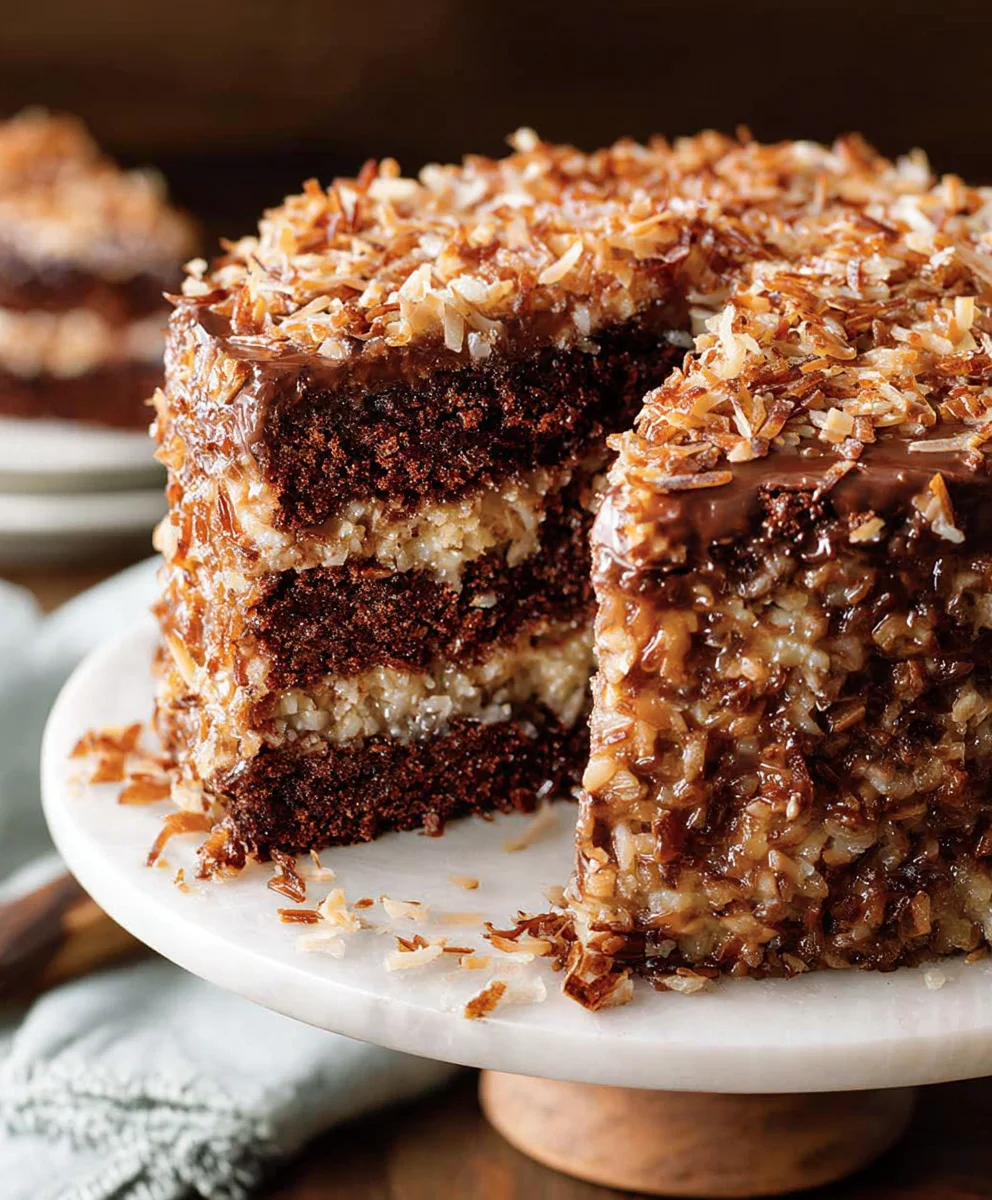
Traditional German Chocolate Cake is more than just a dessert; it’s a journey into a rich, nostalgic world of decadent flavor and comforting sweetness. We all have those iconic desserts that evoke powerful memories, and for many, the Traditional German Chocolate Cake holds a special place. This isn’t your average chocolate cake; it’s a layered masterpiece boasting a moist, dark chocolate sponge that’s both intensely flavorful and beautifully tender. But what truly sets this cake apart, and why has it remained a beloved classic for generations? It’s the magical combination of that divine chocolate cake base paired with its signature, gloriously gooey coconut-pecan frosting. This frosting is a revelation, a caramel-kissed dream that balances the deep chocolate notes with a delightful nutty crunch and tropical sweetness. Get ready to rediscover the joy of a truly authentic, deeply satisfying Traditional German Chocolate Cake, a recipe that promises to impress and delight every single bite.
Ingredients:
- 4 oz semi-sweet chocolate, finely chopped
- 1/4 cup Dutch-process cocoa powder
- 1/2 cup boiling water
- 2 cups all-purpose flour
- 3/4 teaspoon baking soda
- 12 tablespoons unsalted butter, softened
- 1 cup granulated sugar (for cake batter)
- 3/4 cup light brown sugar, packed (for cake batter)
- 3/4 teaspoon salt
- 4 large eggs
- 1 teaspoon vanilla extract
- 3/4 cup sour cream
- 2 cups heavy cream (or evaporated milk, for frosting)
- 2 cups granulated sugar (for frosting)
- 6 large egg yolks (for frosting)
Making the Decadent Chocolate Cake Layers
Phase 1: Preparing the Chocolate Base
To begin extract crafting our Traditional German Chocolate Cake, let’s first prepare a rich, molten chocolate mixture that will form the heart of our cake layers. In a medium-sized heatproof bowl, combine the 4 ounces of finely chopped semi-sweet chocolate and the 1/4 cup of Dutch-process cocoa powder. It’s important to use good quality chocolate for the best flavor. Once these dry ingredients are together, carefully pour the 1/2 cup of boiling water over them. Now, this is where the magic happens – whisk this mixture continuously until the chocolate is completely melted and you have a smooth, glossy ganache. Set this aside to cool slightly while we move on to the dry ingredients. This cooling step is crucial, as adding hot liquid directly to the other batter ingredients can inadvertently cook the eggs.
Phase 2: Combining Dry Ingredients
In a separate, larger mixing bowl, we’ll combine all of our dry cake ingredients. Measure out 2 cups of all-purpose flour and add it to the bowl. Next, incorporate the 3/4 teaspoon of baking soda. It’s always a good practice to whisk these dry ingredients together for a moment. This helps to distribute the baking soda evenly throughout the flour, ensuring consistent leavening in your cake. A well-aerated flour mixture contributes to a lighter texture, which is a hallmark of a great cake.
Phase 3: Creaming Butter and Sugars
Now, let’s get to work on the wet ingredients that will give our cake its structure and sweetness. In a large mixing bowl, or the bowl of your stand mixer fitted with the paddle attachment, cream together the 12 tablespoons of softened unsalted butter with 1 cup of granulated sugar and the 3/4 cup of packed light brown sugar. Creaming means beating these ingredients together until the mixture is light, fluffy, and pnon-alcoholic ale in color. This process incorporates air into the batter, which is vital for a tender crum extractb. You’ll want to scrape down the sides of the bowl periodically to ensure everything is evenly mixed. Once the butter and sugars are well creamed, add the 3/4 teaspoon of salt and beat until just combined.
Phase 4: Incorporating Eggs and Flavor
With our creamed butter and sugar base ready, it’s time to add the eggs. Add the 4 large eggs, one at a time, beating well after each addition until fully incorporated. This step helps to emulsify the batter, creating a smooth and cohesive mixture. Don’t rush this; each egg needs to be thoroughly mixed in before adding the next. Following the eggs, stir in the 1 teaspoon of vanilla extract. Then, gradually add the slightly cooled chocolate mixture from Phase 1 to the butter and sugar mixture, beating on low speed until everything is just combined. Be sure not to overmix at this stage; we want to keep as much air in the batter as possible.
Phase 5: Alternating Wet and Dry Ingredients
This is where our cake batter truly comes together. We’ll alternate adding the dry ingredients (from Phase 2) and the 3/4 cup of sour cream to the wet ingredigin extracts. Begin by adding about one-third of the flour mixture to the batter and mixing on low speed until just combined. Then, add half of the sour cream and mix again until just incorporated. Continue this pattern, adding another third of the flour, the remaining sour cream, and finally, the last portion of the flour mixture. Mix only until the flour streaks disappear. Overmixing at this stage can develop the gluten in the flour too much, resulting in a tough cake. Once everything is combined, gently fold in any remaining bits of flour with a spatula to ensure a uniform batter. Divide this delicious batter evenly between your prepared cake pans and bake according to your recipe’s temperature and time guidelines.
Crafting the Classic German Chocolate Frosting
While your cake layers are baking and cooling, let’s turn our attention to the iconic German chocolate frosting. This frosting is what truly makes this cake special. In a medium saucepan, combine the 2 cups of heavy cream (or evaporated milk, if you prefer), 2 cups of granulated sugar, and the 6 large egg yolks. Whisk these ingredients together thoroughly until the yolks are well broken up and integrated with the cream and sugar. Place the saucepan over medium-low heat and cook, stirring constantly with a whisk or wooden spoon. It is absolutely crucial to stir continuously to prevent the egg yolks from scrambling. You are looking for the mixture to thicken to a consistency that coats the back of a spoon. This usually takes about 10-15 minutes. Do not let it boil vigorously, as this can also cause curdling. Once it has reached the desired thickness, remove the saucepan from the heat immediately. You can add in a touch of vanilla extract here if you like, though traditionally, the flavor comes from the coconut and pecans. Allow this frosting base to cool slightly before stirring in your toasted pecans and shredded coconut, which are essential components of authentic German Chocolate frosting. Once cooled and mixed with the add-ins, this luscious frosting is ready to be spread generously over your cooled cake layers.
Conclusion:
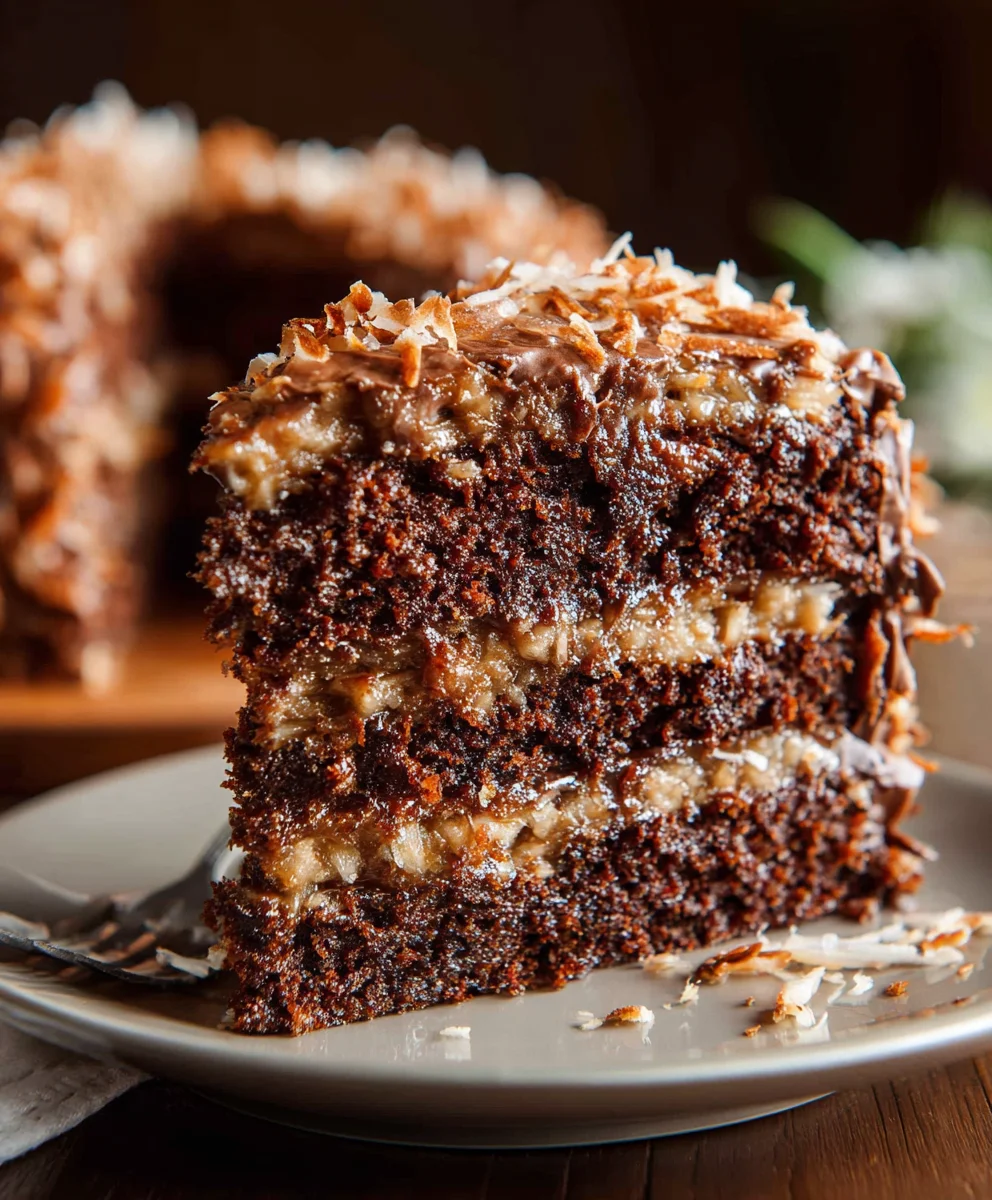
We hope you’ve enjoyed this journey into creating the perfect Traditional German Chocolate Cake! This rich, moist, and undeniably decadent dessert is a true classic for a reason. The combination of moist chocolate cake layers, a creamy coconut-pecan frosting, and that signature chocolate ganache is simply irresistible. Don’t be intimidated by the steps; each one contributes to the incredible final result. Once you’ve mastered this recipe, you’ll find yourself reaching for it for every special occasion, from birthdays to holidays.
For serving, a simple slice on its own is divine. However, you could also pair it with a scoop of vanilla bean ice cream or a dollop of whipped cream for an extra touch of indulgence. If you’re feeling adventurous with variations, consider adding a hint of espresso powder to the cake batter for a deeper chocolate flavor, or perhaps chopped candied gin extractger to the frosting for a warm, spicy note. The possibilities are endless when it comes to this versatile cake!
Remember, baking is about enjoyment and a little bit of love. So, don’t be afraid to experiment and make this Traditional German Chocolate Cake your own. Happy baking!
Frequently Asked Questions:
Can I make this cake ahead of time?
Yes, absolutely! The cake layers can be baked and cooled, then wrapped tightly in plastic wrap and stored at room temperature for up to two days, or in the refrigerator for up to four days. The frosting can also be made a day in advance and stored in the refrigerator. You may need to let it sit at room temperature for a bit and gently stir it to bring it back to a spreadable consistency before frosting the cake. Assemble the cake a few hours before serving for the best texture.
What if I don’t have pecans? Can I substitute another nut?
Certainly! While pecans are traditional and offer a lovely flavor and texture, you can easily substitute other nuts. Walnuts are a fantastic alternative and provide a similar crunch. You could also try almonds (sliced or slivered) or even hazelnuts for a slightly different, but still delicious, flavor profile. Just make sure to toast them lightly before chopping to enhance their flavor.
Authentic German Chocolate Cake Recipe-Best Chocolate Cake Ever
A decadent and authentic German Chocolate Cake recipe featuring moist chocolate layers and a classic coconut-pecan frosting.
Ingredients
-
4 oz semi-sweet chocolate, finely chopped
-
1/4 cup Dutch-process cocoa powder
-
1/2 cup boiling water
-
2 cups all-purpose flour
-
3/4 teaspoon baking soda
-
12 tablespoons unsalted butter, softened
-
1 cup granulated sugar
-
3/4 cup light brown sugar, packed
-
3/4 teaspoon salt
-
4 large eggs
-
1 teaspoon vanilla extract
-
3/4 cup sour cream
-
2 cups heavy cream
-
2 cups granulated sugar
-
6 large egg yolks
Instructions
-
Step 1
Prepare the chocolate base by combining semi-sweet chocolate and cocoa powder in a heatproof bowl. Pour boiling water over them and whisk until a smooth ganache forms. Set aside to cool slightly. -
Step 2
In a separate bowl, whisk together all-purpose flour and baking soda. -
Step 3
Cream softened butter with granulated sugar and light brown sugar until light and fluffy. Add salt and beat until combined. -
Step 4
Beat in eggs one at a time, followed by vanilla extract. Gradually add the cooled chocolate mixture, beating on low speed until just combined. Do not overmix. -
Step 5
Alternately add the dry ingredients and sour cream to the batter, beginning and ending with the dry ingredients. Mix on low speed until just combined, scraping down the sides of the bowl as needed. Gently fold in any remaining flour streaks. -
Step 6
While cake layers bake, prepare the frosting by combining heavy cream, granulated sugar, and egg yolks in a saucepan. Cook over medium-low heat, stirring constantly, until thickened to coat the back of a spoon. Remove from heat and cool slightly before stirring in desired add-ins like toasted pecans and shredded coconut. -
Step 7
Once cake layers are completely cooled, frost generously with the classic German chocolate frosting.
Important Information
Nutrition Facts (Per Serving)
It is important to consider this information as approximate and not to use it as definitive health advice.
Allergy Information
Please check ingredients for potential allergens and consult a health professional if in doubt.

Leave a Comment