

Homemade beef stew is more than just a meal; it’s a warm hug in a bowl, a nostalgic journey, and the ultimate comfort food. There’s something profoundly satisfying about a bubbling pot of rich, savory stew, its aroma filling your kitchen and promising a delicious reward. We all have that memory, don’t we? Perhaps it’s the Sunday dinners at Grandma’s, or a chilly evening made infinitely better by a steaming bowl. What makes this homemade beef stew truly special isn’t just the tender chunks of beef or the perfectly softened vegetables, but the slow, patient cooking that allows all those flavors to meld into a symphony of deliciousness. It’s a dish that speaks of tradition, of love simmered, and of simple ingredients transformed into something extraordinary. Get ready to create your own unforgettable homemade beef stew.

Homemade Beef Stew
There’s nothing quite as comforting and satisfying as a steaming bowl of homemade beef stew. The rich, savory aroma filling your kitchen, the tender chunks of beef melting in your mouth, and the perfectly cooked vegetables all come together to create a truly soul-warming meal. While it might seem like a complex dish, this recipe breaks down the process into simple, manageable steps, ensuring you can create a restaurant-quality stew right in your own home. This hearty stew is perfect for a chilly evening, a family gathering, or simply when you need a delicious and filling meal.
Ingredients:
Cooking Instructions:
Preparing the Beef for Searing
The first crucial step to a flavorful stew is properly preparing and searing the beef. Begin extract by patting your beef chuck roast chunks completely dry with paper towels. This might seem like a minor detail, but it’s essential for achieving a beautiful, golden-brown crust when searing. Moisture on the surface of the meat will steam rather than sear, resulting in less browning and a less intense flavor. Once dry, season the beef generously on all sides with the kosher salt and coarsely ground black pepper. In a shallow dish or on a plate, toss the seasoned beef with the gluten-free all-purpose flour until each piece is lightly and evenly coated. This flour coating will help thicken the stew later on and contributes to the browning process. Don’t worry if you have a little flour left over.
Searing the Beef to Perfection
Now it’s time to build that foundational flavor. Heat the olive oil (or avocado oil) in a large, heavy-bottomed pot or Dutch oven over medium-high heat. You want the oil to be shimmering, but not smoking. Carefully add the floured beef chunks to the hot oil in batches, ensuring you don’t overcrowd the pot. Overcrowding will lead to steaming, not searing. Sear the beef for about 2-3 minutes per side, until a deep brown crust has formed. This browning is where much of the stew’s rich flavor comes from. Once seared, remove the beef from the pot and set it aside on a clean plate. Don’t clean the pot; those browned bits stuck to the bottom are pure flavor gold!
Sautéing the Aromatics
Reduce the heat of the pot to medium. Add the chopped yellow onion to the pot and cook, stirring occasionally, until it begin extracts to soften and turn translucent, about 5-7 minutes. Scrape the bottom of the pot with your spoon to loosen any browned bits from the beef. This process is called deglazing and infuses the onions with that delicious meaty flavor. Next, add the minced garlic and cook for another minute until fragrant, being careful not to burn it. Burnt garlic can impart a bitter taste to your stew.
Building the Stew Base
Once the onions and garlic are fragrant and softened, stir in the tomato paste. Cook the tomato paste for about 1-2 minutes, stirring constantly. This step helps to caramelize the tomato paste, deepening its flavor and removing any raw, metallic notes. Then, pour in the beef broth, scraping the bottom of the pot to dissolve any remaining browned bits. Add the Worcestershire sauce and the bay leaf to the pot.
Simmering the Stew to Tenderness
Return the seared beef chunks to the pot. Bring the liquid to a simmer, then reduce the heat to low, cover the pot, and let the stew gently simmer for at least 1.5 hours, or until the beef is becoming tender. Stir occasionally to prevent sticking. After the initial simmering period, add the carrot chunks and Yukon Gold potato pieces to the pot. Stir to combine, then re-cover and continue to simmer for another 30-45 minutes, or until the vegetables are fork-tender and the beef is incredibly tender and easily shreds with a fork.
Finishing Touches and Serving
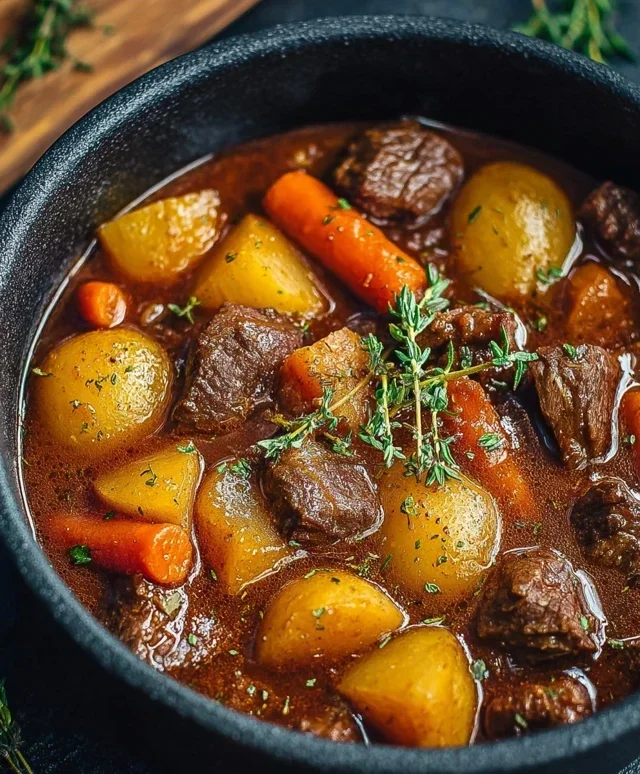
Before serving, remove and discard the bay leaf. Stir in the fresh thyme leaves. Taste the stew and adjust seasoning with salt and pepper if needed. The flavors will have melded beautifully by this point. If you prefer a thicker stew, you can create a slurry of 1 tablespoon cornstarch mixed with 2 tablespoons cold water and stir it into the simmering stew, cooking for a few more minutes until thickened. Ladle the hot, comforting beef stew into bowls. It’s absolutely divine served with crusty bread for dipping, mashed potatoes, or a simple side salad. Enjoy the fruits of your labor – a truly satisfying and delicious homemade meal.
Conclusion:
And there you have it – your guide to creating a truly satisfying and comforting homemade beef stew. This recipe is fantastic because it transforms simple ingredients into a rich, deeply flavorful dish that’s perfect for warming you up on a chilly evening or bringin extractg everyone together for a hearty meal. The slow cooking process tenderizes the beef beautifully, infusing every bite with the savory goodness of the vegetables and broth. It’s a meal that truly feels like a hug in a bowl!
I love serving this stew with crusty bread for dipping, mashed potatoes, or even over a bed of fluffy rice. For a delightful twist, consider adding mushrooms or parsnips along with the other vegetables. You could also introduce a splash of red grape juice during the simmering stage for an even deeper, more complex flavor profile. Don’t be afraid to experiment and make this recipe your own!
I truly encourage you to give this homemade beef stew a try. It’s incredibly rewarding to create something so delicious from scratch, and the aroma filling your kitchen as it simmers is simply wonderful. Enjoy the process, and most importantly, savor every delicious spoonful!
Frequently Asked Questions:
Can I make this beef stew ahead of time?
Absolutely! In fact, homemade beef stew often tastes even better the next day as the flavors have more time to meld together. Simply let it cool completely, then store it in an airtight container in the refrigerator for up to 3-4 days. Reheat gently on the stovetop or in the oven.
What is the best cut of beef for stew?
For the most tender and flavorful stew, opt for cuts like chuck roast, brisket, or beef shoulder. These cuts have enough connective tissue that breaks down during slow cooking, resulting in incredibly tender meat.
Can I freeze homemade beef stew?
Yes, you can! Once cooled, portion the stew into freezer-safe containers or bags. It will keep well in the freezer for up to 2-3 months. Thaw overnight in the refrigerator before reheating.
Homemade Beef Stew
A hearty and comforting homemade beef stew, perfect for a chilly evening. Made with tender beef, vegetables, and a rich broth.
Ingredients
-
2 pounds Beef Chuck Roast, cut into 2-inch chunks, excess fat removed
-
1 teaspoon Kosher Salt
-
½ teaspoon Coarsely Ground Black Pepper
-
2 tablespoons Gluten-free All-Purpose Flour
-
2 tablespoons Olive Oil
-
½ Large Yellow Onion, chopped
-
4 Garlic Cloves, minced
-
1 Large Carrot, cut into 2-inch chunks
-
2 Yukon Gold Potatoes, diced into 2-inch pieces
-
2 Cups Beef Broth
-
¼ Cup Tomato Paste
-
1 tablespoon Worcestershire Sauce
-
1 Bay Leaf
-
2 teaspoons Fresh Thyme Leaves
Instructions
-
Step 1
Pat the beef dry and season generously with salt and pepper. -
Step 2
Toss the beef with flour until evenly coated. -
Step 3
Heat olive oil in a large Dutch oven or heavy-bottomed pot over medium-high heat. Brown the beef in batches, about 2-3 minutes per side. Remove beef and set aside. -
Step 4
Add the chopped onion to the pot and cook until softened, about 5 minutes. Add minced garlic and cook for 1 minute more until fragrant. -
Step 5
Stir in the tomato paste and cook for 1 minute, scraping up any browned bits from the bottom of the pot. -
Step 6
Return the beef to the pot. Add beef broth, Worcestershire sauce, bay leaf, and thyme. Bring to a simmer, then reduce heat to low, cover, and cook for 1.5 hours. -
Step 7
Add the carrots and potatoes to the pot. Stir, cover, and continue to cook for another 1 hour, or until the beef and vegetables are tender. -
Step 8
Remove the bay leaf before serving. Adjust seasoning if needed.
Important Information
Nutrition Facts (Per Serving)
It is important to consider this information as approximate and not to use it as definitive health advice.
Allergy Information
Please check ingredients for potential allergens and consult a health professional if in doubt.



Leave a Comment