

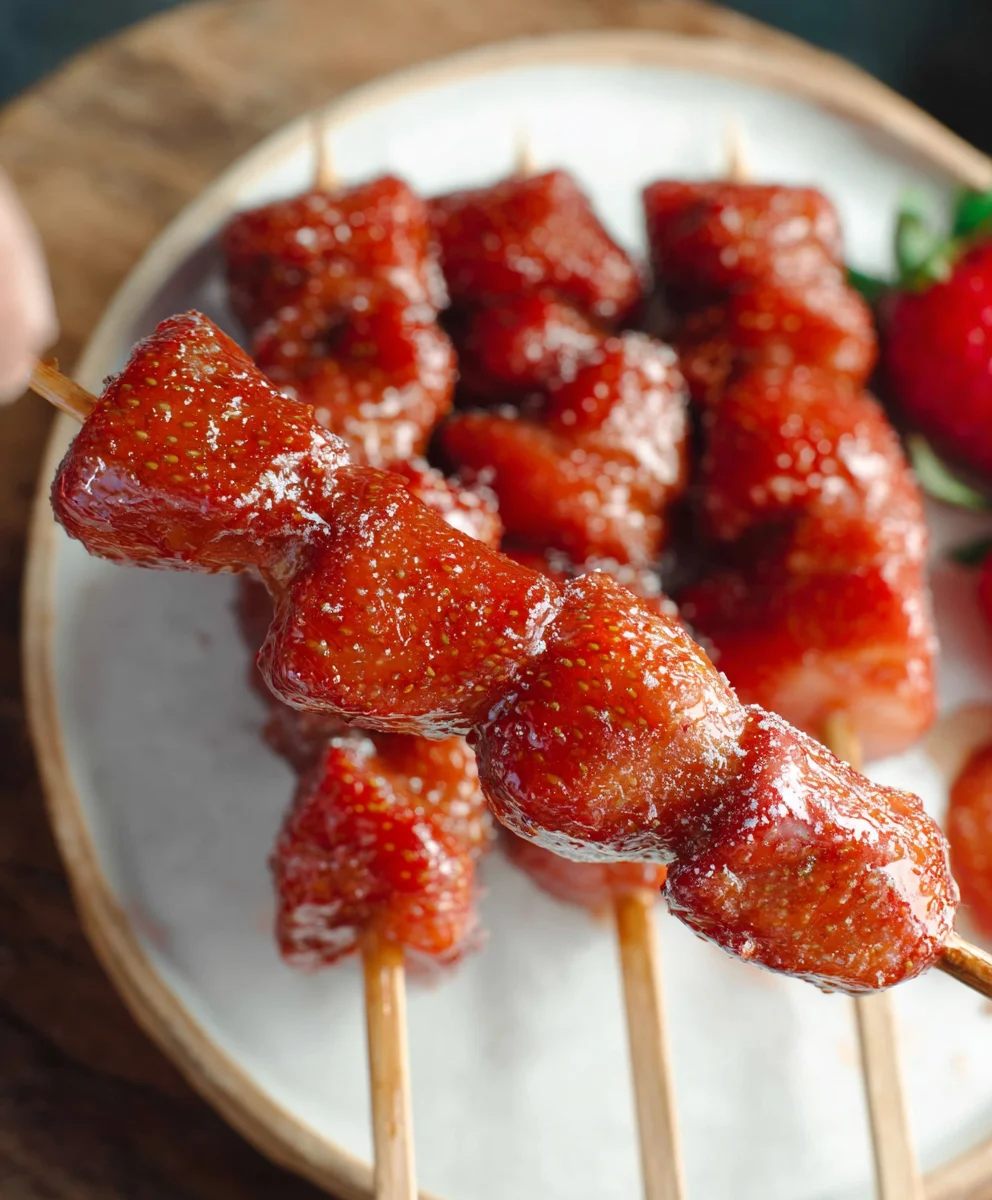
Tanghulu recipe experiences are pure magic, transforming humble fruits into sparkling jewels of sweet delight. If you’ve ever spotted those mesmerizing, candy-coated creations and wondered if you could recreate their dazzling allure at home, you’re in the right place! The appeal of Tanghulu is undeniable: the satisfying crunch as you bite through the glassy sugar shell, giving way to the juicy, refreshing fruit within. It’s a simple concept, yet the result is incredibly sophisticated and visually stunning. What makes a truly special Tanghulu recipe? It’s all about achieving that perfect, shatteringly crisp candy coating that isn’t too thick or too thin, and that adheres beautifully to the fruit without becoming sticky or overly chewy. This Tanghulu recipe is designed to guide you every step of the way, ensuring your homemade versions are as delightful to eat as they are to behold, capturing the essence of this beloved street food snack.
Ingredients:
- 2 cups granulated sugar
- 1 cup water
- 1 cup light corn syrup
- Assorted fruits (such as strawberries, grapes, cherry tomatoes, small apples, kumquats, mandarin oranges)
- Wooden skewers or chopsticks
- Parchment paper or silicone baking mat
Preparing Your Fruits and Workspace
The first and most crucial step for a successful Tanghulu recipe is preparing your fruits and ensuring your workspace is ready. This might seem straightforward, but attention to detail here will prevent sticky messes and ensure your candied fruits look beautiful.
Start by washing all your chosen fruits thoroughly under cool running water. For fruits like strawberries, gently pat them dry with a paper towel. It’s essential that the fruits are completely dry; any moisture can interfere with the candy coating setting properly. For larger fruits like apples, you’ll want to cut them into bite-sized wedges. Remove any cores or seeds. If you’re using grapes, you can leave them whole or halve them if they are particularly large. Cherry tomatoes are a fun addition and work best whole. Mandarin oranges can be peeled and the segments separated. Kumquats can be left whole, but if you prefer, you can slice them in half and remove any seeds.
Once your fruits are prepped and dry, it’s time to skewer them. Insert a wooden skewer or chopstick firmly into each piece of fruit. If you are using grapes, you can skewer several together on one stick, creating a little cluster. For fruit wedges like apples, make sure the skewer goes through a sturdy part to hold its shape. Don’t overcrowd the skewers; you want enough space for each piece of fruit to be coated evenly.
Next, prepare your cooling station. Line a baking sheet or a large platter with parchment paper or a silicone baking mat. This will prevent the hot, freshly dipped Tanghulu from sticking and make them easy to remove once cooled. Have this ready before you start making the sugar syrup, as you’ll need to work quickly once the syrup reaches the right temperature.
Crafting the Perfect Candy Syrup
Now for the magical part – the candy syrup! This is where the transformation happens. In a medium-sized, heavy-bottomed saucepan, combine the 2 cups of granulated sugar, 1 cup of water, and 1 cup of light corn syrup. The heavy-bottomed pot is important because it distributes heat evenly, preventing hot spots that could scorch your sugar.
Place the saucepan over medium-high heat. Stir the mixture gently until the sugar is completely dissolved. Once the sugar has dissolved, stop stirring. Continuing to stir after the sugar is dissolved can encourage crystallization, which will make your candy coating grainy instead of smooth and glassy.
Now, you’ll need a candy thermometer. Clip it to the side of the saucepan, ensuring the tip is submerged in the syrup but not touching the bottom of the pot. You’re aiming for a temperature between 300°F and 310°F (149°C and 154°C). This is the hard crack stage, which is crucial for achieving that signature brittle candy shell.
The syrup will start to boil. Watch it carefully as it heats up. You’ll see bubbles forming and the color of the syrup will gradually change from clear to a pnon-alcoholic ale yellow, then to a golden amber. This process can take anywhere from 15 to 30 minutes, depending on your stove and pan. Be patient! Avoid the temptation to stir or agitate the pot. If you see any sugar crystals forming on the sides of the pan, you can gently brush them down with a pastry brush dipped in water.
As the syrup approaches the target temperature, keep a very close eye on it. The color will deepen quickly in the final stages. Once it reaches 300°F to 310°F, carefully remove the saucepan from the heat immediately. The residual heat will continue to cook the syrup slightly.
The Art of Dipping and Cooling
This is the most exciting and, admittedly, the trickiest part. Once your syrup is at the correct temperature, you need to work quickly but carefully. The syrup is extremely hot.
Hold a skewered piece of fruit by the skewer. Dip it into the hot sugar syrup, swirling it gently to coat all sides evenly. You want a thin, even coating, not a thick, gloopy layer. Tilt the pan slightly to make dipping easier. Rotate the fruit while submerged to ensure it’s fully covered. Once coated, lift the fruit out of the syrup and let any excess drip back into the pan for a second or two.
Then, carefully hold the fruit over the prepared parchment paper or silicone mat and let it drip dry. You can gently swirl the fruit in the air for a few seconds to help it set and create a smooth finish. Be cautious not to touch the candy coating while it’s still hot and molten.
Repeat this dipping process for all your prepared fruit skewers. You may need to reheat the syrup if it starts to cool down too much before you finish dipping. If the syrup becomes too thick or starts to crystallize, you can return it to low heat to gently warm it up again, but avoid boiling it further if possible.
Allow the Tanghulu to cool completely at room temperature until the candy shell is hard and brittle. This typically takes about 15-30 minutes, depending on the ambient temperature and humidity. You’ll know they are ready when they feel completely solid and make a satisfying “snap” if you gently tap them. Avoid the urge to rush the cooling process by placing them in the refrigerator, as this can sometimes cause condensation and make the candy sticky.
Troubleshooting and Tips for Tanghulu Perfection
There are a few common pitfalls when making Tanghulu, but with a little know-how, you can overcome them. If your candy coating is crystallizing, it’s often because you stirred the sugar syrup after it began to boil, or there were sugar crystals left on the sides of the pan that fell into the syrup. Remember, once the sugar is dissolved, resist the urge to stir!
If your candy coating is too soft or sticky, it likely means the syrup didn’t reach a high enough temperature. Ensure your candy thermometer is accurate and that you’re holding the syrup at the hard crack stage (300-310°F / 149-154°C) for long enough to cook out the excess water.
Humidity can also be a Tanghulu’s enemy. On very humid days, the candy can absorb moisture from the air and become sticky. For the best results, try making Tanghulu on a dry day.
For a professional finish, after dipping, you can carefully twirl the fruit as it drips. This can create lovely, delicate strings of hardened sugar. Also, make sure not to dip too deeply into the syrup for too long, as this can make the coating too thick and prone to cracking. A quick, even dip is key.
If you have leftover syrup and want to make more, you can reheat it gently, but be aware that re-boiling can sometimes affect the texture. It’s often best to make a fresh batch if you need more.
Enjoy your beautiful, homemade Tanghulu! They are a delightful sweet treat that looks as impressive as it tastes.
Conclusion:
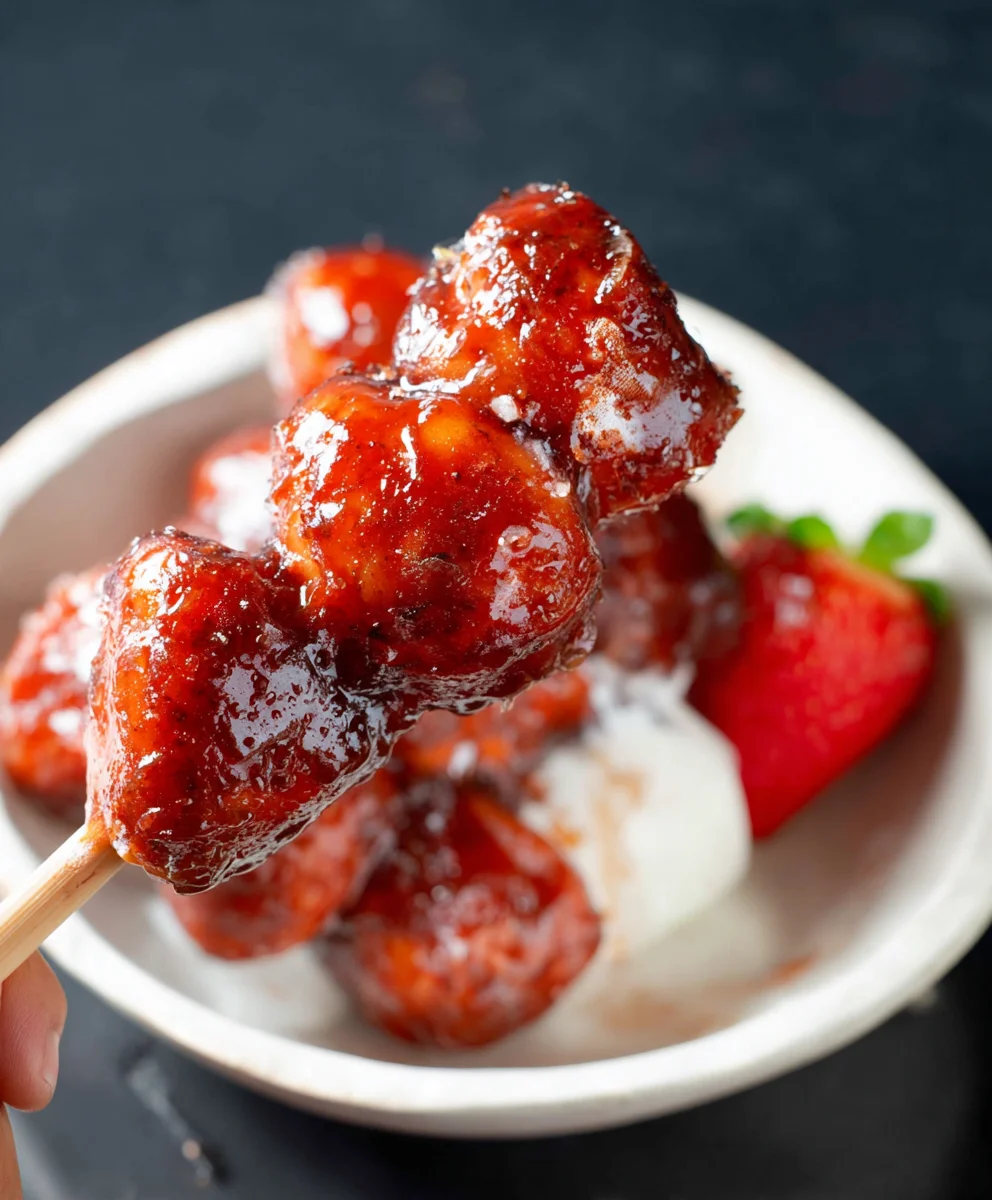
And there you have it – your very own perfect batch of Tanghulu! This delightful candied fruit treat is surprisingly simple to make and offers a fantastic balance of sweet, tart, and crunchy. The crisp sugar shell encasing juicy fruit is truly a joy to experience. I hope you have as much fun making and sharing these vibrant skewers as I do. They are absolutely wonderful on their own, but can also be a stunning addition to dessert platters or a fun activity for parties. Don’t be afraid to experiment with different fruits – the possibilities are endless!
For serving, Tanghulu is best enjoyed fresh, right after the candy has hardened. They look beautiful arranged on a plate or in a tall glass. Some fantastic serving suggestions include pairing them with a simple cup of green tea or as a sweet finnon-alcoholic ale to a light meal. For variations, consider using different types of fruit like grapes, kiwi slices, or even small peach halves. You could also drizzle a little melted dark chocolate over the hardened candy for an extra layer of indulgence. Get creative and make this Tanghulu Recipe your own!
Frequently Asked Questions about Tanghulu:
Q: My candy coating is too soft or sticky. What did I do wrong?
A: This usually happens if the sugar syrup doesn’t reach the correct temperature. Make sure your syrup reaches between 300°F and 310°F (150°C and 155°C) on a candy thermometer. If it’s below this, it won’t harden properly. Also, ensure you’re working quickly once the syrup is ready to coat your fruit.
Q: Can I store Tanghulu for later?
A: Tanghulu is best enjoyed fresh. The humidity in the air can cause the candy coating to become sticky over time. If you must store them, keep them in an airtight container at room temperature for no more than a day, but be aware that the crispness may be slightly reduced.
Easy Tanghulu Recipe – Sweet Candied Fruit Skewers
Learn how to make beautiful and delicious Tanghulu, a popular Chinese candied fruit snack, with this easy-to-follow recipe. Perfect for a sweet treat!
Ingredients
-
2 cups granulated sugar
-
1 cup water
-
1 cup light corn syrup
-
Assorted fruits (such as strawberries, grapes, cherry tomatoes, small apples, kumquats, mandarin oranges)
-
Wooden skewers or chopsticks
-
Parchment paper or silicone baking mat
Instructions
-
Step 1
Prepare your fruits by washing and thoroughly drying them. Cut larger fruits into bite-sized pieces. Skewer each piece of fruit onto a wooden skewer or chopstick, leaving space between pieces. Line a baking sheet or platter with parchment paper or a silicone mat for cooling. -
Step 2
In a heavy-bottomed saucepan, combine granulated sugar, water, and light corn syrup. Place over medium-high heat and stir until sugar is completely dissolved. Stop stirring once dissolved to prevent crystallization. -
Step 3
Clip a candy thermometer to the side of the saucepan, ensuring it’s submerged but not touching the bottom. Heat the syrup without stirring until it reaches the hard crack stage, between 300°F and 310°F (149°C and 154°C). This process can take 15-30 minutes. The syrup will turn a golden amber color. -
Step 4
Once the syrup reaches the target temperature, immediately remove the saucepan from the heat. Carefully dip each skewered fruit into the hot syrup, swirling gently to coat all sides evenly with a thin layer. Tilt the pan to help with dipping. -
Step 5
Lift the coated fruit out of the syrup, allowing excess to drip back into the pan for a second or two. Place the dipped fruit onto the prepared parchment paper or silicone mat to cool and harden. -
Step 6
Repeat the dipping process for all fruit skewers. If the syrup cools too much or thickens, gently reheat it over low heat, but avoid re-boiling. Allow the Tanghulu to cool completely at room temperature until the candy shell is hard and brittle (about 15-30 minutes).
Important Information
Nutrition Facts (Per Serving)
It is important to consider this information as approximate and not to use it as definitive health advice.
Allergy Information
Please check ingredients for potential allergens and consult a health professional if in doubt.
Leave a Comment