

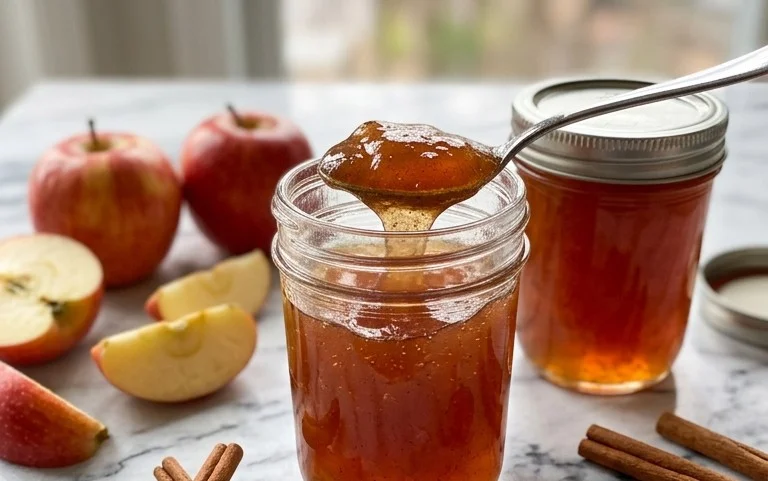
Apple Cinnamon Jelly starts with soft apples simmered with cinnamon sticks and whole cloves, then strained into a clear, warmly spiced juice. I like making it when crisp fall apples are plentiful, because the kitchen fills with a gentle cinnamon scent while the fruit cooks. The finished jelly has a smooth, delicate texture and a bright apple taste, with spice that stays in the background rather than covering up the fruit.
This recipe uses the apple peel and cores during cooking, which help give the juice body, and a cheesecloth spice bundle keeps stray cloves out of the jars. A slow drain also helps the jelly stay clear, so let the cooked fruit drip without pressing it if appearance matters to you. Apple Cinnamon Jelly is lovely on toast, but it also pairs well with warm biscuits, sharp cheddar, or a spoonful stirred into plain yogurt. Make a batch when you have a few hours for simmering and draining, then enjoy that familiar apple-and-spice flavor well beyond apple season.
Ingredients:
- 5 lbs of apples
- 4 cinnamon sticks
- 1 tablespoon whole cloves
- 3 cups water
- 7 cups sugar
- 1 package pectin
- Cheesecloth
- Jars
Prepare the apples and spices
- Wash and cut the apples. Rinse the apples well under cool running water, then remove the stems and cut the fruit into quarters. Keep the cores and peel; they help give the juice body and contain natural pectin. Cut away bruised or spoiled spots, but there is no need to peel or core sound apples.
- Bundle the spices. Put the cinnamon sticks and whole cloves in a square of cheesecloth, then tie it closed so the spices cannot escape. A snug bundle makes it easy to lift the spices out later and keeps the finished jelly clear of loose clove pieces.
- Simmer the fruit. Put the apple pieces, spice bundle, and 3 cups of water in a large, heavy pot. Cover and bring the water to a gentle boil over medium-high heat. Lower the heat and simmer for about 20 to 30 minutes, stirring now and then so the apples cook evenly. They are ready when they are very soft and break apart easily against the side of the pot. Add no extra water unless the pan is at risk of scorching; too much water can leave the jelly weak.
Strain and measure the juice
- Let the juice drain. Set a large bowl beneath a strainer lined with several layers of damp cheesecloth. Carefully pour in the cooked apples and liquid, then let the juice drip through. For clearer jelly, allow it to drain on its own for at least 2 hours, or overnight in the refrigerator. Pressing or squeezing the fruit gets more juice but can make the jelly cloudy. Lift out and discard the spice bundle once the fruit has finished cooking.
- Measure the strained juice. Read the pectin package before moving on, since packages can differ in type and instructions. Measure the strained apple juice and use the quantity specified for the package. If there is more juice than needed, save the extra for another use rather than adding it all to the pot. If there is less, keep the proportions and follow the package’s guidance; changing the liquid amount can affect the set.
Cook the jelly
- Prepare the jars. Wash the jars and lids in hot, soapy water and rinse them well. Keep the jars hot until filling so they are less likely to crack when the boiling jelly goes in. Set out a ladle and a clean surface for the filled jars. Follow the lid maker’s directions for preparing the lids, since different lids may need different handling.
- Heat the juice and pectin. Pour the measured juice into a large pot with enough room for it to foam as it boils. Add the pectin according to its package directions, stirring until it is dissolved. Bring the mixture to a full boil over medium-high heat, stirring often. Use a large pot rather than a small saucepan; jelly can foam up quickly once it reaches a hard boil.
- Add the sugar. Stir in all 7 cups of sugar until it dissolves. Bring the mixture back to a full rolling boil, the kind that keeps bubbling even while you stir. Boil for the length of time stated on the pectin package, stirring constantly. Avoid guessing at the cooking time, because the pectin type and the amount of juice affect how the jelly sets.
- Check the finish and fill the jars. Remove the pot from the heat and skim away any foam with a clean spoon. Ladle the hot jelly into the warm jars, leaving the headspace recommended by your jar or canning instructions. Wipe each rim clean so no sticky jelly interferes with the seal. Add the lids and bands as directed by the lid maker, tightening the bands only as instructed.
Process and store
For shelf storage, process the filled jars in a boiling-water canner using a current tested schedule for your jar size and altitude. Keep the jars covered with water during processing, and start timing once the water returns to a steady boil. Use jar lifters to remove them, then set them upright on a towel with space between each jar. Leave them undisturbed for 12 to 24 hours. Check that each lid has sealed before storing the jars in a cool, dark place. Refrigerate any jar that does not seal, and use it first.
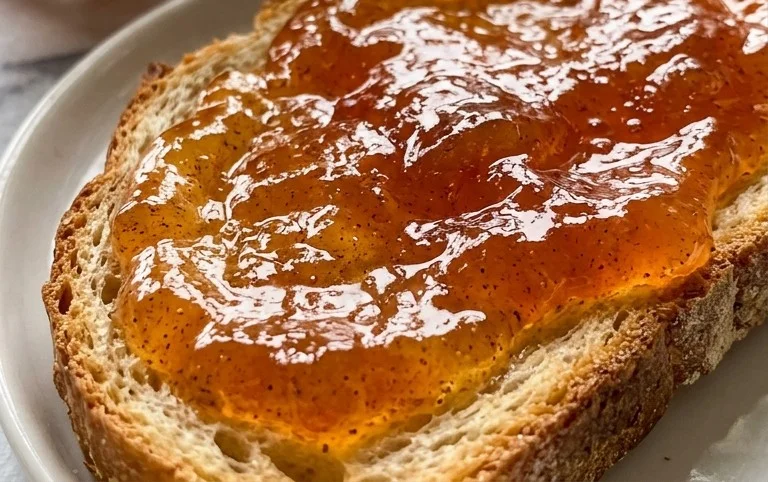
Apple Cinnamon Jelly should become glossy and hold its shape after it cools. Give the jars a full day before judging the set; warm jelly is naturally loose. If a jar stays soft, keep it refrigerated and spoon it over toast, oatmeal, or plain yogurt. The cinnamon and clove make it especially good with sharp cheddar or spread thinly inside a toasted sandwich. Store opened jars in the refrigerator and use a clean spoon each time.
Conclusion:
Apple Cinnamon Jelly brings together soft apples, cinnamon sticks, and whole cloves in a clear, gently spiced spread. I like that the method makes good use of the fruit, while a patient cheesecloth drain helps keep the finished jars bright and free of spice pieces. Serve it on toast or biscuits, spoon it beside sharp cheddar, or stir a little into plain yogurt. For a variation, use a little less clove for a milder spice note, or add another cinnamon stick if you enjoy a stronger cinnamon taste.
Give the juice time to drain rather than squeezing the cloth, and follow a tested canning process for filling and storing jars safely. If the jelly is slow to set, allow it the full setting time before deciding it needs a change. This is a satisfying batch to make with seasonal apples, and the steps are straightforward when you take them one at a time.
Why is my jelly cloudy?
Pressing the cooked apples can push fine pulp through the cloth. Let the juice drip on its own for a clearer result.
How can I adjust the spice?
Use fewer cloves for a softer flavor, while keeping the cinnamon sticks for their warm aroma.
Apple Cinnamon Jelly
A clear, spiced apple jelly made with cinnamon, cloves, and pectin.
Ingredients
-
5 lbs of apples
-
4 cinnamon sticks
-
1 tablespoon whole cloves
-
3 cups water
-
7 cups sugar
-
1 package pectin*
Instructions
-
Step 1
Wash the apples and cut them into pieces, leaving the cores and peels on. -
Step 2
Combine the apples, cinnamon sticks, whole cloves, and water in a large pot. Bring to a boil, then simmer until the apples are soft. -
Step 3
Strain the cooked apples through cheesecloth into a clean container; let the juice drain without pressing the fruit. -
Step 4
Measure the extracted juice and combine it with the pectin in a clean pot, following the pectin package directions. -
Step 5
Bring the mixture to a full rolling boil. Add the sugar, return to a rolling boil, and cook according to the pectin package directions, stirring constantly. -
Step 6
Remove the pot from the heat and skim off any foam. Ladle the jelly into prepared jars, leaving the headspace recommended by a tested canning procedure. -
Step 7
Wipe the jar rims, apply the lids, and process the jars using a tested canning procedure appropriate for your jar size and altitude.
Important Information
Nutrition Facts (Per Serving)
It is important to consider this information as approximate and not to use it as definitive health advice.
Allergy Information
Please check ingredients for potential allergens and consult a health professional if in doubt.



Leave a Comment